
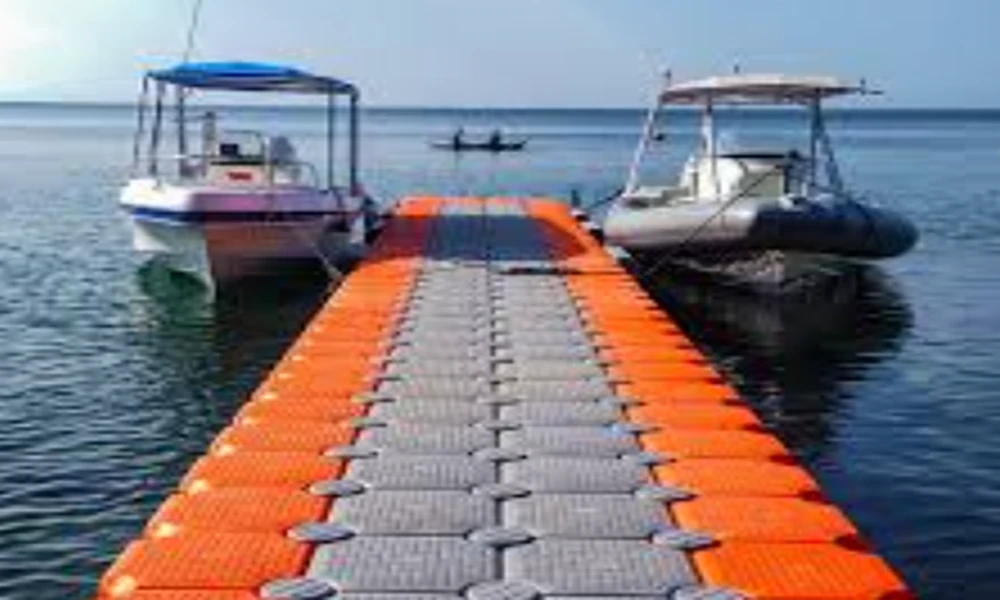
Choosing the right floating dock material can make a big difference in how your waterfront space looks, feels, and holds up over time. Whether you enjoy boating, fishing, swimming, or simply relaxing near the water, your dock needs to handle regular use and changing weather conditions.
But with several materials available, how do you know which one is right for your property?
The most common floating dock materials include wood, aluminum, composite, and plastic. Each offers different benefits when it comes to cost, durability, maintenance, appearance, and comfort.
Some homeowners prefer the natural look of wood. Others want a dock that requires less cleaning and fewer repairs. And in coastal areas, resistance to saltwater corrosion becomes especially important.
Before choosing a material, it helps to understand how floating docks are built and what each option offers.
What Are Floating Docks Made Of?
Floating docks are platforms designed to rise and fall with changing water levels. Unlike fixed docks supported by permanent posts, they use flotation systems to remain above the water.
Most floating docks include three important components:
- Dock frame: The structural support system that holds the platform together. Common materials include pressure-treated wood and marine-grade aluminum.
- Decking surface: The part people walk on. It may be made from wood, composite boards, aluminum, or plastic.
- Flotation system: Sealed floats or pontoons that provide buoyancy. Many use polyethylene shells, sometimes with enclosed foam cores.
These components do not have to be made from the same material.
For example, a floating dock may use an aluminum frame, composite decking, and polyethylene flotation units.
This combination allows property owners to balance structural strength, maintenance needs, and appearance.
Understanding these differences makes comparing dock materials much easier.
1. Wood Floating Docks: Natural Appearance and Traditional Design
Wood remains a familiar choice for waterfront construction. Its natural appearance works well around lakes, rivers, and residential shorelines.
Pressure-treated lumber is often used for dock framing because it is manufactured to resist decay and insect damage. Other suitable wood species may be used for decking, depending on availability and local conditions.
Advantages of Wood Floating Docks
Wood offers several practical benefits.
It creates a warm, traditional appearance that fits naturally into many outdoor settings.
Wooden decking can also be repaired one board at a time when individual sections become damaged.
Another advantage is availability. Lumber and common fastening materials are often easier to find than specialized dock components.
For some projects, wood may also provide a lower initial material cost.
Disadvantages of Wood Floating Docks
The biggest drawback is maintenance.
Wood is regularly exposed to moisture, sunlight, and changing temperatures. Over time, boards may crack, warp, splinter, or deteriorate.
Cleaning, inspections, and suitable protective treatments may be necessary to maintain the surface.
Wooden components can also become slippery when algae or organic buildup develops.
When Is Wood a Good Choice?
Wood may be a practical option for homeowners who appreciate a traditional waterfront appearance and do not mind occasional maintenance.
It can work well for residential docks in protected water, provided the materials and structural design are appropriate for the environment.
2. Aluminum Floating Docks: Lightweight Strength and Low Maintenance
Aluminum is widely used in modern floating dock construction, especially for structural framing.
Its main advantage is its strength relative to its weight.
An aluminum frame can support a dock without adding as much weight as some alternative framing materials.
That matters because the heavier the dock becomes, the more flotation capacity may be required.
Advantages of Aluminum Floating Docks
Aluminum offers several benefits:
- Lightweight structural components
- Good corrosion resistance when properly specified
- Minimal routine refinishing
- Suitable for many freshwater and coastal applications
- Compatibility with different decking surfaces
Marine-grade aluminum is often selected for floating docks because it performs well in demanding waterfront environments.
It also allows manufacturers to create modular sections that can be assembled or reconfigured.
Disadvantages of Aluminum Floating Docks
Aluminum generally costs more upfront than basic pressure-treated lumber.
Although aluminum resists ordinary rust, it is not completely immune to corrosion.
Saltwater exposure, incompatible fasteners, and contact with dissimilar metals can create corrosion problems if connections are not properly designed.
Aluminum decking may also become uncomfortable under direct sunlight, depending on its finish and surface temperature.
When Is Aluminum a Good Choice?
Aluminum is worth considering when you want a strong, relatively lightweight dock that requires less routine upkeep.
It can be especially useful for larger floating platforms, modular docks, and locations where structural weight matters.
3. Composite Floating Docks: Wood-Like Appearance With Less Maintenance
Composite decking combines wood fibers, polymers, and other ingredients to create boards designed for outdoor use.
It is commonly installed over a separate structural frame rather than serving as the dock’s main flotation system.
Composite has become popular because it offers a wood-like appearance without requiring the same routine staining or sealing.
Advantages of Composite Floating Docks
One major benefit is easier maintenance.
Composite boards generally do not need periodic staining or painting.
Many products also resist insect damage, splintering, and common forms of wood deterioration.
Homeowners can choose from different finishes, colors, and surface textures.
This makes composite attractive for people who want a clean, finished appearance.
Disadvantages of Composite Floating Docks
Composite decking typically costs more upfront than basic wood decking.
Some products can become hot during sunny weather.
Certain surfaces may also become slippery when wet, particularly when algae or dirt builds up.
Composite boards can expand and contract with temperature changes, so proper installation spacing is important.
Not every composite product is approved for marine dock applications. Manufacturers may specify particular support spacing, fastening systems, and installation conditions.
When Is Composite a Good Choice?
Composite is a good option for homeowners who want a traditional decking appearance with less routine maintenance.
It is often paired with aluminum framing to create a dock that combines structural strength with a decorative walking surface.
4. Plastic Floating Docks: Modular Design and Water Resistance
Plastic floating docks are commonly manufactured using high-density polyethylene, also called HDPE.
Some systems use large molded plastic sections that connect to form a floating platform.
Others use plastic flotation units beneath a separate frame and decking surface.
These designs are popular because they resist water-related deterioration and can offer flexible layouts.
Advantages of Plastic Floating Docks
Plastic dock systems can provide:
- Resistance to rot and many forms of corrosion
- Relatively low maintenance requirements
- Modular sections that can be rearranged
- Good suitability for certain swimming and recreational applications
- No wood splinters from the molded plastic surface
Many systems are designed with textured walking surfaces and integrated connection points.
Because individual sections can often be added or removed, modular plastic docks may work well when waterfront needs change.
Disadvantages of Plastic Floating Docks
Plastic docks do not always have the same appearance or feel as traditional framed docks.
Some lightweight modular systems may move more noticeably in waves or boat wakes.
Plastic also expands and contracts with temperature changes.
Long-term UV resistance depends on the material formulation and quality of the product.
A molded plastic system designed for light recreational use may not be suitable for supporting heavy equipment or large boats.
When Is Plastic a Good Choice?
Plastic docks can be useful for swimming platforms, kayaking areas, smaller recreational docks, and waterfront properties where flexible configurations are important.
However, the system must be properly rated for its intended loads and water conditions.
Wood vs. Aluminum vs. Composite vs. Plastic: Which Floating Dock Material Is Better?
The following comparison provides a general overview of the four main material categories.
| Material | Upfront Cost | Maintenance | Main Advantage | Main Consideration |
| Wood | Often lower | Moderate to high | Natural appearance | Moisture and surface deterioration |
| Aluminum | Moderate to high | Low | Lightweight structural strength | Corrosion control at connections |
| Composite | Moderate to high | Low to moderate | Wood-like appearance | Heat and manufacturer requirements |
| Plastic / HDPE | Varies by system | Low | Water resistance and modularity | Movement, loading, and UV quality |
These comparisons are general. Actual costs and performance depend on the dock’s design, manufacturer, installation conditions, and local material prices.
What Factors Should You Consider When Choosing Floating Dock Materials?
The best floating dock material for one property may not be suitable for another.
Before making a decision, consider the following factors.
1. Freshwater vs. Saltwater Conditions
Water conditions affect material performance.
Freshwater environments may allow more flexibility in choosing framing and decking materials.
Saltwater creates additional corrosion concerns, especially around metal hardware and structural connections.
If you are installing a dock along the coast, choose materials and fastening systems designed for marine exposure.
2. Waves, Currents, and Changing Water Levels
Floating docks naturally move with the water.
However, some locations experience stronger currents, larger waves, or frequent boat wakes.
These conditions place additional stress on frames, flotation units, anchors, and connection points.
A lightweight recreational platform may perform well in a protected lake but struggle in an exposed waterfront location.
The dock’s structural design and anchoring system can matter just as much as the decking material.
3. Installation Budget
The lowest upfront price does not always produce the lowest long-term cost.
Wood may be more affordable initially but can require ongoing cleaning, refinishing, and board replacement.
Aluminum, composite, and plastic systems may cost more at installation while reducing certain maintenance tasks.
When comparing prices, include flotation units, connectors, anchors, installation labor, and expected repairs.
4. Maintenance Requirements
Think about how much time you want to spend maintaining your dock.
Wood usually requires more attention to surface condition and deterioration.
Aluminum frames need periodic inspections for corrosion, loose connections, and damage.
Composite and plastic surfaces generally require cleaning and checks for wear, movement, or damaged components.
No floating dock is completely maintenance-free.
5. Comfort and Slip Resistance
A dock should be comfortable and reasonably secure to walk on.
This becomes especially important when people use it barefoot or climb out of the water.
Surface texture, drainage, algae buildup, and sunlight exposure all affect comfort and traction.
Ask manufacturers about wet slip resistance and recommended cleaning methods rather than assuming one material will always be safer.
6. Dock Size and Intended Use
A swimming platform has different requirements from a dock designed for boat mooring.
If you plan to install benches, storage boxes, boat lifts, or other heavy equipment, the dock must have adequate structural and flotation capacity.
Material selection should follow the intended use instead of appearance alone.
Can You Combine Different Floating Dock Materials?
Yes. In fact, many floating docks use mixed-material construction.
A common combination includes an aluminum frame, composite decking, and polyethylene floats.
This arrangement can provide a relatively lightweight structural base while offering a finished walking surface.
Another option is wood framing with plastic flotation units.
The important consideration is compatibility.
Fasteners, attachment systems, weight distribution, and structural support must work together.
Using high-quality decking will not solve problems caused by an undersized frame or insufficient flotation.
How Long Do Floating Dock Materials Last?
The lifespan of floating dock materials depends on the environment, product quality, installation, and maintenance.
Wood can remain useful for many years with suitable treatment and care, but individual boards may need replacement.
Aluminum framing can provide long service life when properly designed and protected from damaging corrosion.
Composite decking may resist many problems associated with traditional wood, although exposure to sunlight, heat, and repeated loading still matters.
Plastic floating systems can also provide extended service life when manufactured with appropriate UV protection and used within their design limits.
Rather than relying on a single advertised lifespan, ask about product warranties, replacement-part availability, and maintenance recommendations.
Frequently Asked Questions About Floating Dock Materials
What Is the Most Durable Material for a Floating Dock?
There is no single material that performs best in every setting.
Marine-grade aluminum framing and quality polyethylene flotation systems can offer strong durability when properly designed and maintained.
However, exposure conditions and installation quality play major roles.
Is Composite Decking Better Than Wood for a Floating Dock?
Composite decking may require less routine refinishing and is generally resistant to splintering and insect damage.
Wood offers a traditional appearance and may cost less upfront.
The better choice depends on your budget, appearance preferences, and willingness to perform maintenance.
Are Plastic Floating Docks Good for Saltwater?
Many HDPE floating dock systems are suitable for saltwater environments because the plastic itself resists corrosion.
However, metal fasteners, connections, anchoring hardware, and other components must also be suitable for marine use.
Do Aluminum Floating Docks Rust?
Aluminum does not rust in the same way as iron or steel.
However, it can corrode, particularly when exposed to unfavorable marine conditions or incompatible metals.
Proper material selection and connection design help manage these risks.
Which Floating Dock Material Requires the Least Maintenance?
Aluminum framing and many plastic dock systems generally require less routine refinishing than traditional wood.
Composite decking also reduces the need for staining and sealing.
Still, every dock needs regular inspections and cleaning.
Final Thoughts: Choosing the Right Floating Dock Material
Choosing between wood, aluminum, composite, and plastic comes down to more than appearance.
Wood offers a traditional waterfront style, but it needs regular care.
Aluminum provides lightweight structural strength with relatively low maintenance requirements.
Composite decking combines a wood-like look with easier routine upkeep.
Plastic dock systems offer water resistance and flexibility, particularly for modular recreational platforms.
The right choice depends on your waterfront conditions, intended use, budget, and maintenance expectations.
Before purchasing, compare the complete dock system, including the frame, decking, flotation units, connections, and anchoring method.
With the right materials and proper installation, a floating dock can become a reliable and enjoyable part of your waterfront property for years to come.
This post was written by a professional at Supreme Marine Floating Docks. Supreme Marine Floating Docks is dedicated to providing top-quality floating docks and marine accessories that combine durability, innovation, and superior performance. While we are a new brand, our team brings over 50 years of combined industry experience, making us a trusted name in the marine world. We are passionate about designing and delivering products that meet the highest standards, ensuring reliability and longevity in all marine environments. Whether for residential, commercial, or recreational use, our docks are crafted with precision and care, setting a new benchmark in the industry. At Supreme Marine, we aren’t just floating dock builders Miami -we create lasting solutions.