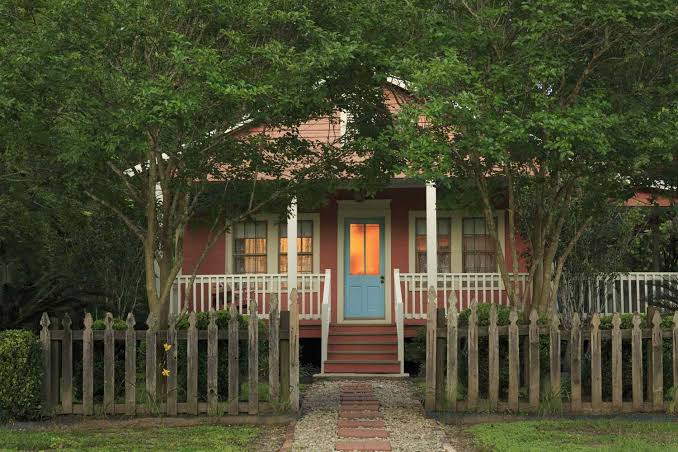
Two neighbors on the same Grants Pass street, planted the same summer, with the same fantasy of leafy shade over the back deck. Twenty years later, one of them barely thinks about her trees. The other spends every August with one eye on the sky and one on the limbs hanging over his roof. Same street, same soil, very different outcomes. The difference comes down to a handful of choices made early and revisited often, and it is the kind of thing a local tree service in Grants Pass sees play out across Josephine County year after year.
The two homeowners here are composites, but the situations are real ones.
Dana’s Yard
Dana planted a mix: a white oak in the back, a couple of native serviceberries near the fence, and a Douglas fir she inherited and chose to keep, set well back from the house. She gave each tree room. Nothing touches the roofline, and the lowest branches on the fir were limbed up over the years so a ground fire has no ladder to climb.
What stands out is how unglamorous her routine is. She waters deeply a few times through the dry months instead of sprinkling daily. She keeps mulch away from the trunks. Every spring she walks the yard with a coffee and looks up. When a branch died back on the oak, she called someone that same month, and it was a ten-minute job instead of an emergency.
Mark’s Yard
Mark loved the look of a mature, dense canopy, so he let everything grow together. Limbs from a big madrone brush his gutters. A pair of conifers planted too close to the house now crowd the eaves, and dead needles pile up on the roof every fall. Lower branches reach nearly to the ground, and a thick tangle of dry brush sits beneath them.
None of it looked dangerous to him until the smoky summer when a neighbor mentioned it. Southern Oregon’s long, dry season turns exactly this kind of setup into fuel: continuous, connected and close to the house. Dead material on a roof, vegetation against siding and branches that bridge from tree to tree to structure give fire a path it would otherwise lack.
What the Difference Teaches
Dana’s yard was not fire-proof, and no yard is. Her advantage was separation and tidiness. Her trees stood apart from each other and from the house, and nothing dead was left to accumulate. Fire behavior is largely about continuity, so breaking up the fuel matters more than removing every tree. Trees can actually help, since a well-spaced, healthy canopy shades the ground and keeps surrounding vegetation less parched.
The Oregon Department of Forestry publishes guidance on creating defensible space around your home, including how far to clear and how to think about zones near the structure. It is worth reading before you decide what to prune or remove. Local rules and recommendations can vary, so confirm what applies to your property.
Beyond Fire
Fire is the headline risk here, but Grants Pass trees face others. Hot, dry summers stress even native species, and a stressed tree is a weak tree. Drought-weakened limbs can drop with little warning, and weakened trees are more attractive to bark beetles and other pests. Winter storms then test whatever structural flaws summer left behind. A tree that handles all of it well is usually one that was matched to the site, given space and cared for steadily, not one that was left alone for decades.
Rescuing Mark’s Yard
The good news is that Mark’s situation is fixable, and it did not require clear-cutting. A qualified arborist would start by looking at the whole picture: which trees are healthy and worth keeping, which are too close to the house to manage safely, and which limbs create the shortest path from ground to roof. Likely steps include pulling branches back from the structure, raising the canopy on lower limbs, thinning crowded conifers so crowns no longer touch, clearing dead wood and removing the one or two trees that cannot coexist with the house. Understory brush gets cleared separately.
The sequence matters too. Dangerous and dead material comes first, structural pruning second, cosmetic shaping last. A good arborist will also tell you what to keep, because the aim is a yard that is safer and still beautiful.
A Few Habits Worth Stealing From Dana
Keep roofs and gutters free of needles and leaves, especially before the dry season. Leave clearance between branches and the house, and between tree crowns where practical. Water established trees deeply during long dry spells. Look up at least once a season, and treat any sudden change, such as a new lean, a dying section or fresh cracks, as a reason to call someone rather than wait. Hire professionals who carry insurance and can explain their plan, and avoid anyone who pushes removal as the only option.
Dana likes to say that her trees are the reason she loves her yard, and also the reason she checks it so often. That is the right balance. The goal is not to fear the trees, only to stay a step ahead of them.