When a spring line of thunderstorms rolls across the Ohio Valley, the calls that follow tend to sound alike. A branch came through the shingles over the back bedroom, or one corner of the roof lost a dozen tabs and the ceiling is starting to spot. What happens in the next few hours matters, but what happens in the next few weeks matters more, because the fix that stops tonight’s water and the fix that protects the house for the next decade are two very different jobs.
Homeowners in Louisville and Indianapolis often meet both jobs in a single storm season, and a local outfit such as Citadel Roofing & Construction treats them as separate stages on purpose. Its crews answer emergency calls to secure a damaged roof first, then return with a free inspection to weigh repair against full replacement, and the company states plainly that it does not file frivolous insurance claims. Workmanship coverage runs five years on complete replacements and two years on other work, which says a lot about how differently a contractor views a lasting repair compared with a holding measure.
The trouble starts when those two stages blur together. A tarp meant to last a week stays up through a whole summer, or a smear of roofing cement gets treated as the final answer. Knowing where one ends and the other begins saves money, protects an insurance claim and keeps hidden rot from setting in.
Tonight the Only Goal Is Keeping Water Out
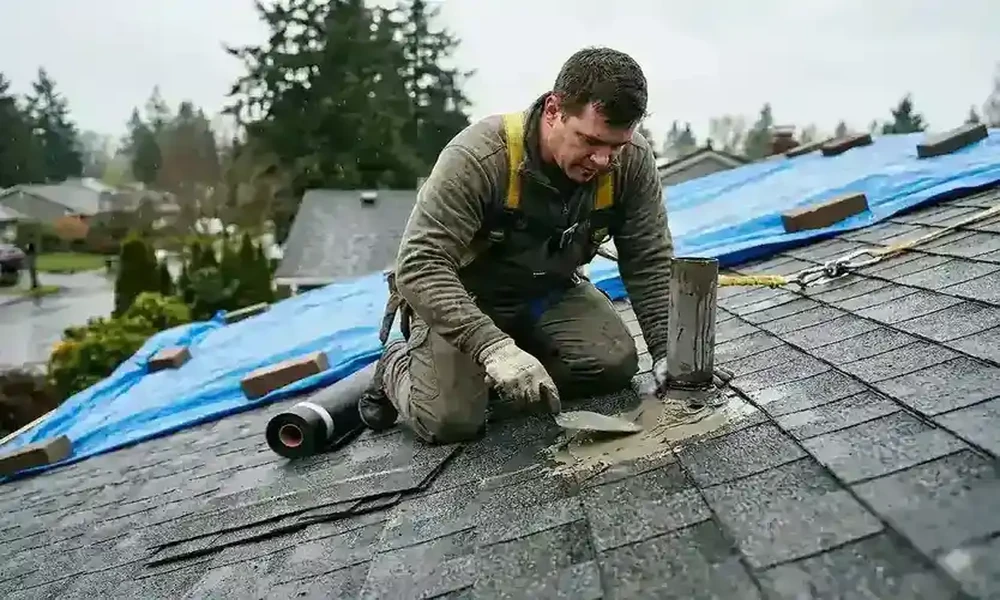
Emergency work has one priority. Water entering the attic soaks insulation, stains drywall and can reach light fixtures, so the first fix is about direction and coverage rather than appearance. A well placed tarp runs up and over the ridge so rain sheds off instead of slipping under the top edge. It gets fastened through wood strips laid along its edges rather than nailed straight through the fabric, which would tear in the first strong gust. Large openings may need temporary support underneath so pooled rainwater doesn’t rip the sheeting.
Safety sits above everything else at this stage. A roof that sags or feels soft underfoot should not be walked on at all, wet shingles are slick, and ladder work in the dark after a storm is how many homeowners end up hurt. Photographs taken before anyone touches the damage are worth far more later than most people expect.
Five Ways a Patch and a Repair Part Company
What holds it in place
Temporary covers rely on battens, sandbags, cap nails and tape. They’re designed to come off without much fuss. A permanent shingle repair goes back to the manufacturer’s nailing pattern, with fasteners set just below the seal strip so the new shingle bonds to the course above once the sun warms the adhesive.
What it is made of
Polyethylene tarps break down under sunlight, and plastic roof cement turns brittle after a few rounds of freezing and thawing. Lasting repairs use matched shingles, fresh underlayment and, wherever water reached the deck, new sheathing cut back to solid wood.
How long it is meant to survive
A tarp buys weeks, sometimes a couple of months if someone checks it after every windy day. A proper repair is expected to outlive the warranty attached to it and age at roughly the same pace as the rest of the roof.
What it leaves on paper
Homeowner policies generally expect the owner to take reasonable steps to prevent further damage after a loss, so receipts for tarping, plastic and emergency labor belong in the claim file. Water that got in before the cover went up counts too. The EPA’s brief guide to mold, moisture and your home notes that wet materials dried within 24 to 48 hours usually escape mold growth, so invoices for fans, dehumidifiers or removed insulation deserve a spot in that file as well.
How the costs behave
Emergency service usually costs more per square foot because of the timing and the risk involved. A permanent repair costs more in total but spreads that spend across many years. Paying for a careful stopgap rarely wastes money. Paying twice for the same leak because the stopgap stayed too long almost always does.
Signs the Temporary Fix Has Overstayed
A stopgap that lingers starts creating problems of its own. Wind lifts a loose tarp corner and works it like a sail, tearing shingles that came through the storm untouched. Condensation builds under dark plastic on warm afternoons. Meanwhile the decking below may be holding moisture with nowhere to dry out. A few warning signs tend to show up first.
- The tarp flaps, sags or collects standing water between the battens.
- New ceiling stains appear after the cover went on.
- The attic smells musty or the insulation feels damp to the touch.
- Roofing cement has cracked, pulled away from the surface or turned chalky.
- The deck near the patched area feels soft when pressed from inside the attic.
Any one of these means the holding pattern is over, even if the insurance paperwork isn’t finished yet.
Repairs That Only Pretend to Be Permanent
Some fixes look finished and still behave like patches. Caulk run along a chimney or sidewall in place of new step flashing is the classic case. It seals for a season, then the joint opens as the masonry and the roof deck move at different rates. A single new shingle slipped into an older field may match poorly in color and seal poorly too, because the surrounding tabs have lost their flexibility.
Hail bruises are another trap. A shingle that took a hard impact can look fine for months, then shed granules and crack around the dent. A repair that only addresses the obvious hole leaves those weakened spots waiting for the next storm.
This is where the repair or replacement question actually gets settled. When damage is spread across several slopes, when the shingles are past roughly twenty years, or when decking shows rot beyond the impact zone, patching each spot becomes a chain of stopgaps with a permanent price tag. Humid Louisville summers and Indianapolis winters full of repeated freezing push older roofs toward that point faster than milder climates do.
Letting the Roof Get Back to Its Real Work
The healthiest way to look at storm damage is as two chapters. The first is short and a little ugly, with a tarp and some lumber doing their best to keep the house dry. The second is slower and deliberate, built on an inspection, a written scope, matched materials and fastening done to the manufacturer’s standards. Homeowners who keep those chapters separate tend to see smoother claims and fewer callbacks, mostly because nothing temporary gets mistaken for finished.
So when the next storm passes through, cover what needs covering, photograph everything and hold on to the receipts. Then give the roof a date by which the real repair will be scoped. A stopgap with an end date is good protection. One without an end date is simply a slower leak.